The Story
A ninety-minute immersive theatre experience set across 17 rooms of a decaying Victorian mansion. 100 guests per performance. Four unreliable narrators. And behind the walls, hidden laboratories that nobody expects to find.
A ninety-minute immersive theatre experience set across 17 rooms of a decaying Victorian mansion. 100 guests per performance. Four unreliable narrators. And behind the walls, hidden laboratories that nobody expects to find.
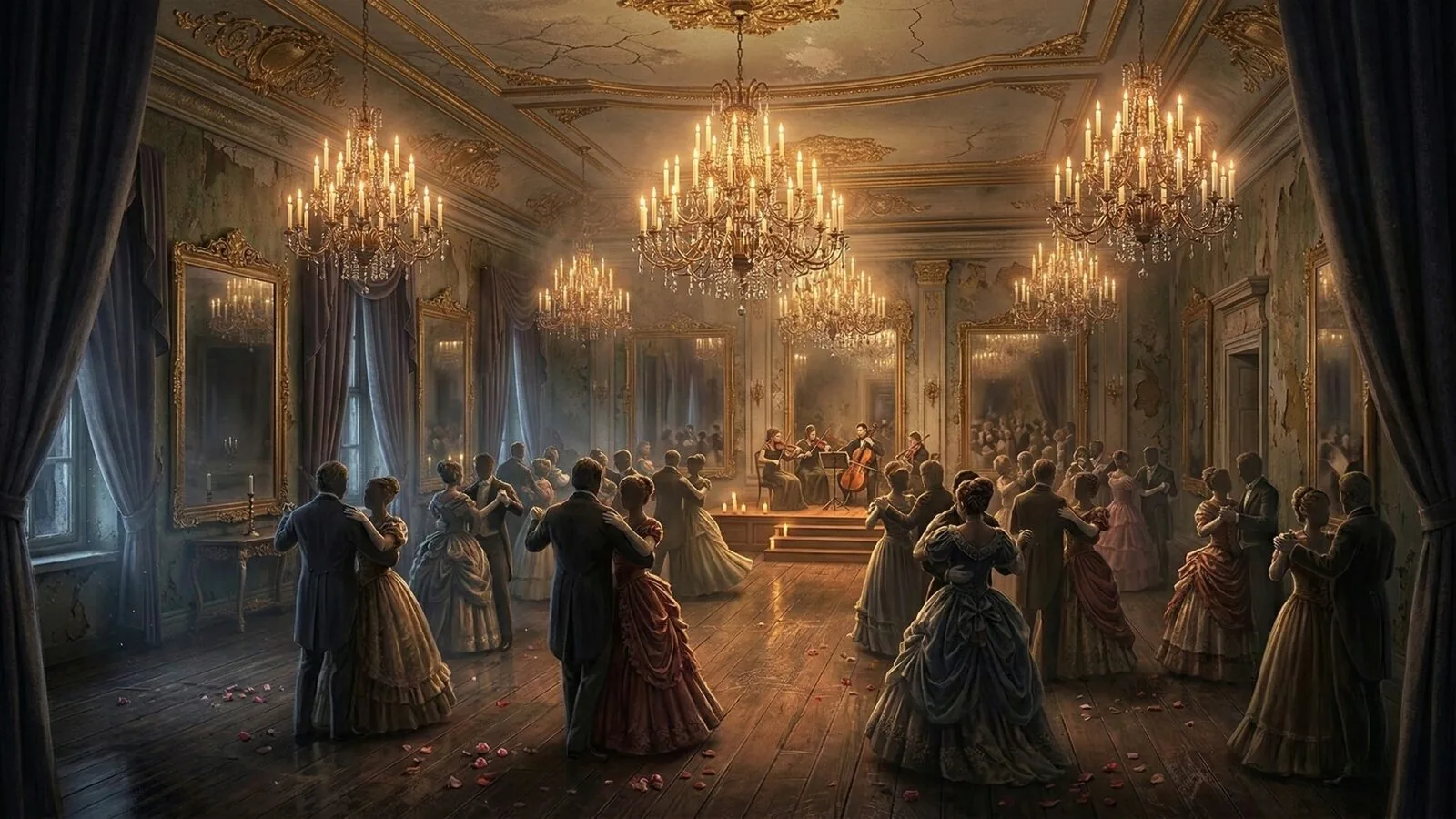
Chandeliers, candlelight, a Victorian ball in full swing. This is the world every guest steps into.
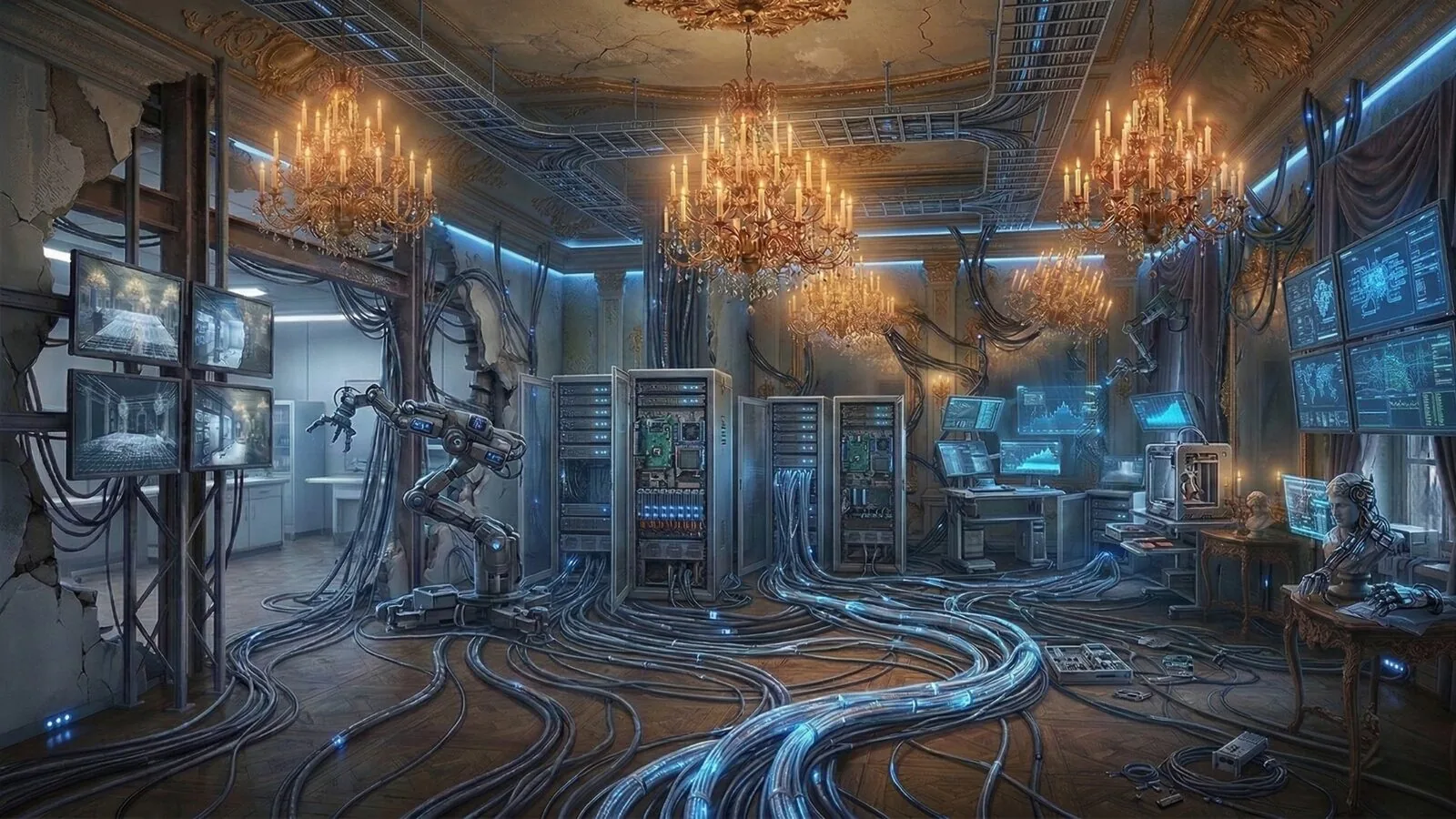
The same room, two hours later. Cables and monitors have overtaken the grandeur. Two realities destroying each other.
Each character leads 25 guests through a different wing of the house, telling a different version of events. Every narrator is unreliable. Every version contradicts the others. A single visit only gives you half the picture.
Halfway through the evening, every group follows a different narrator. Your new character takes you back through rooms you've already visited, but now the story is completely different. The objects mean different things. The rooms feel wrong.
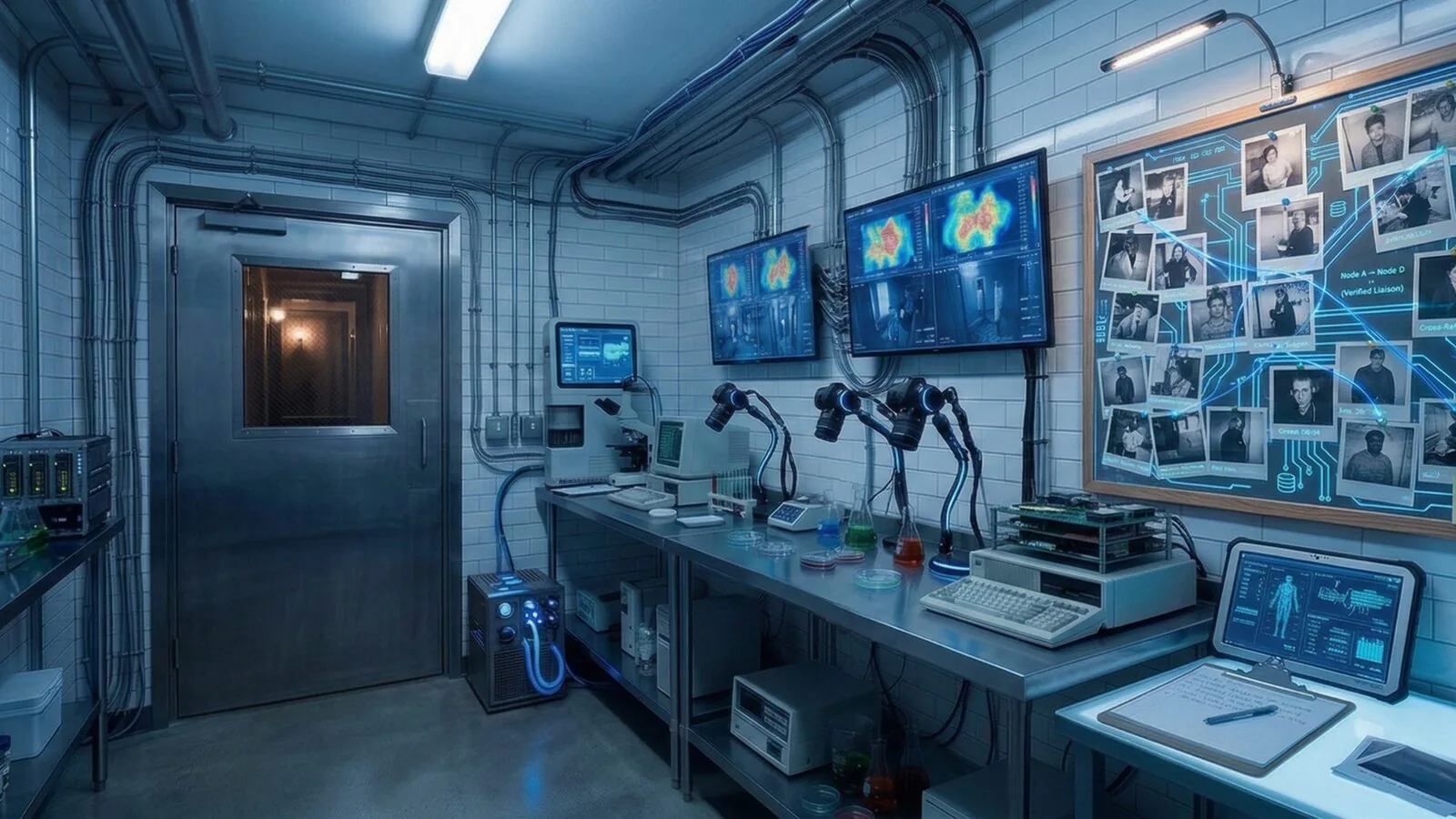
In groups of just 12, guests find hidden doors into spaces that shouldn't exist. Pristine research laboratories with CCTV footage of themselves. Their photos printed and filed. The aesthetic shock is total: candlelight to strip lighting, dark wood to white surfaces. The guests are the experiment.
 Before
 After
After
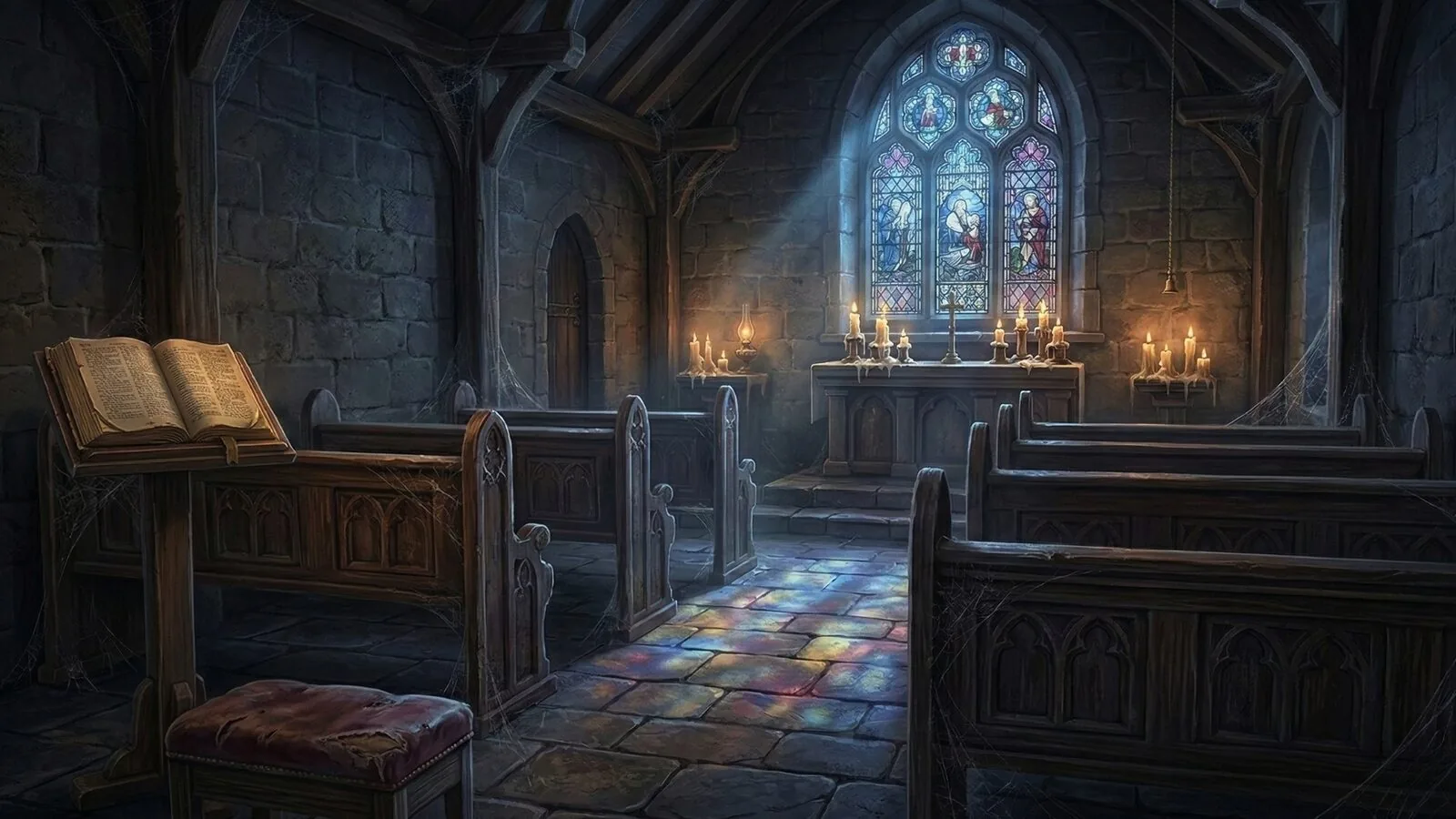
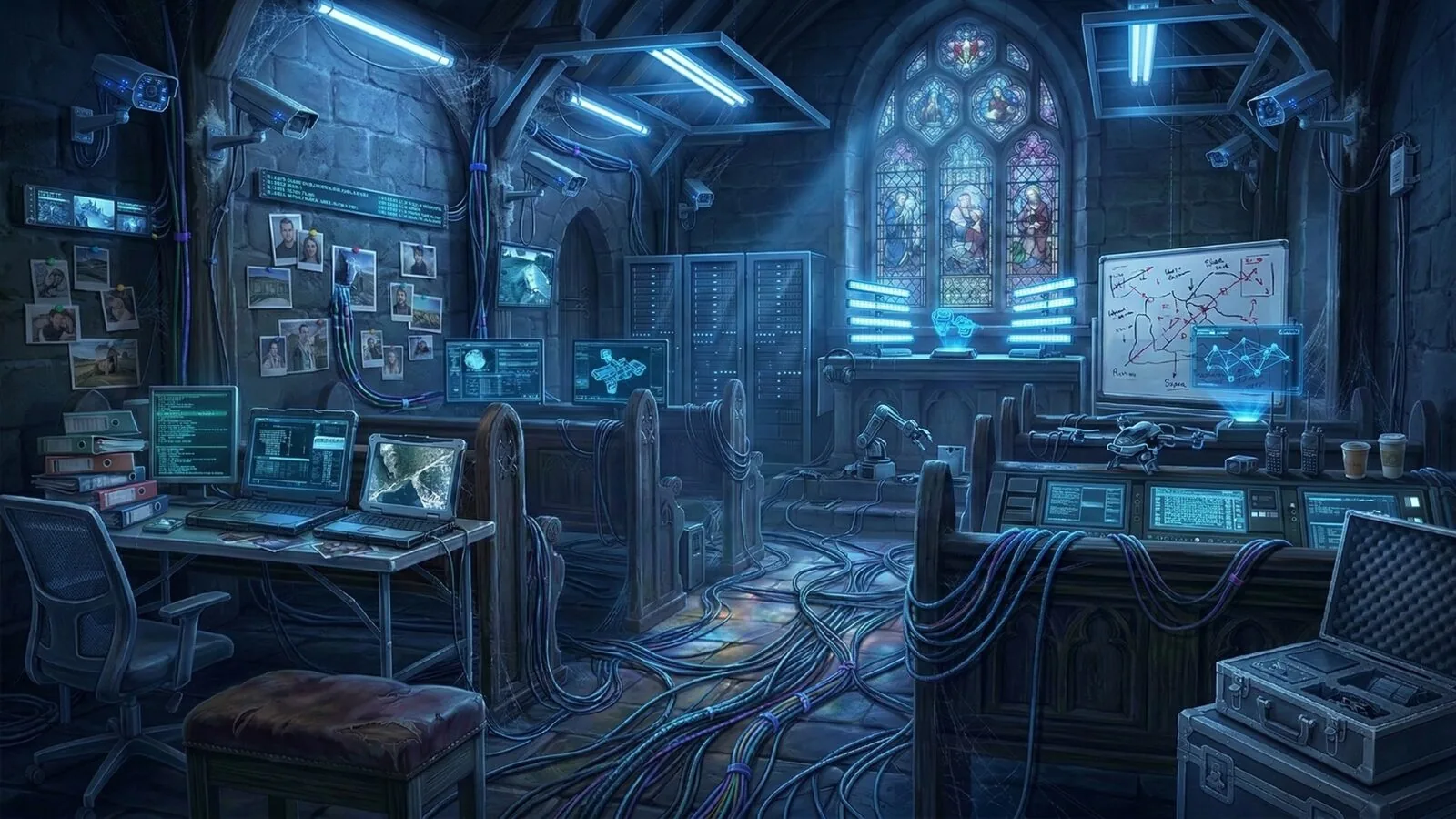
Stained glass and candlelight. A space that feels sacred and untouched. Then the transformation: cables snake across the altar, equipment is bolted to the pews, and the chapel becomes a monitoring station. The stained glass is still there, but now it illuminates something clinical.
 Before
 After
After
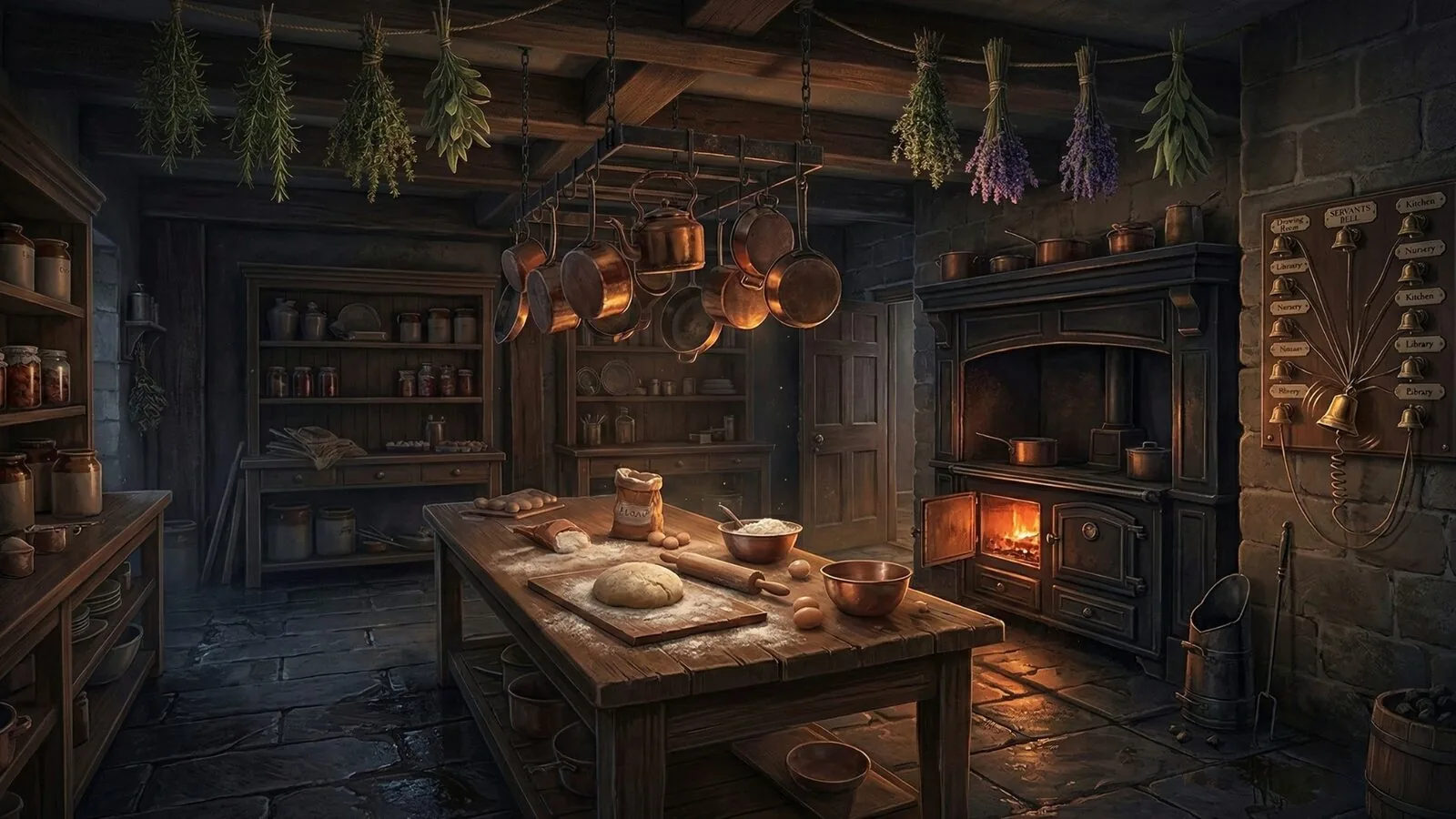
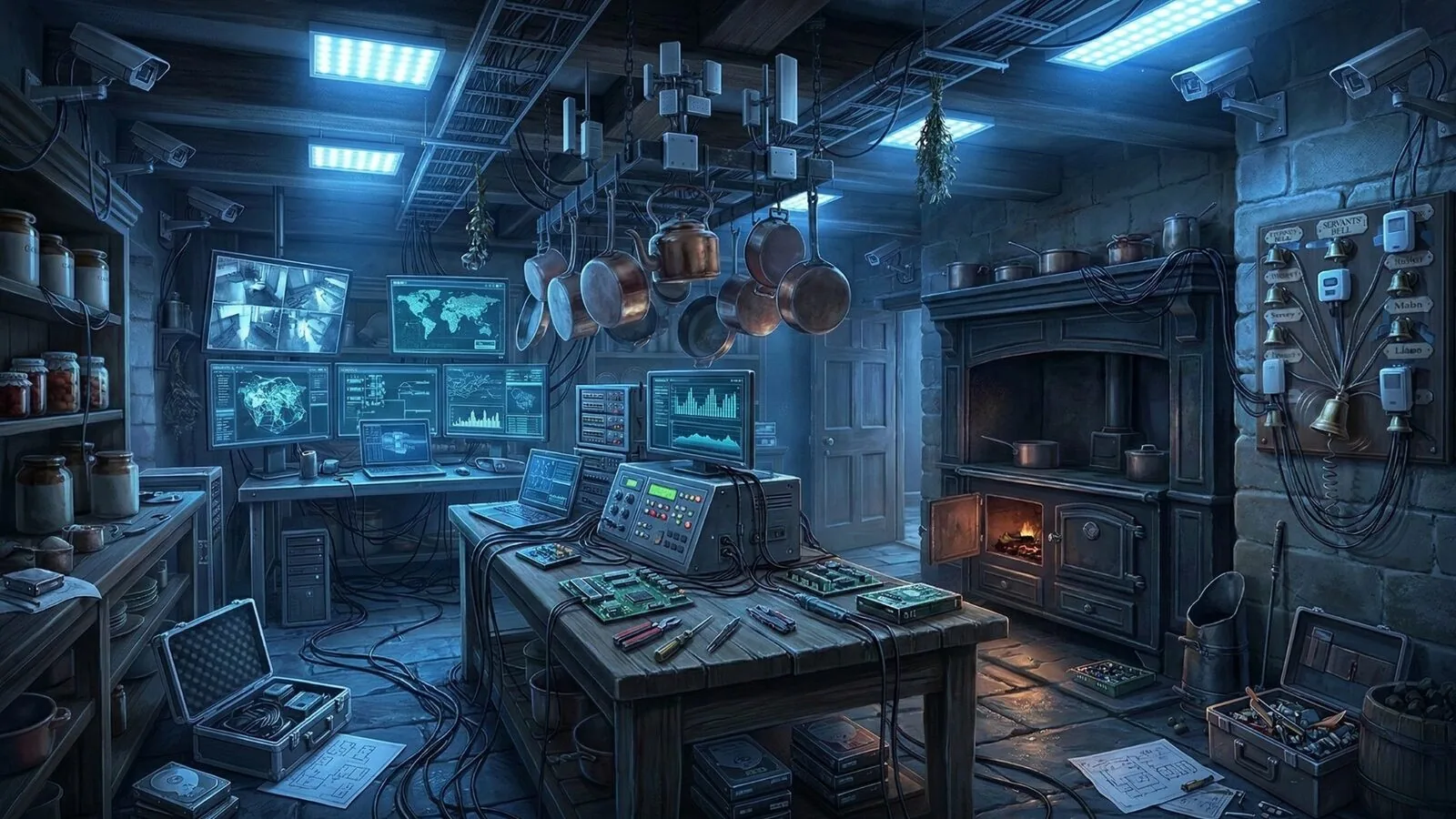
Cast iron pans and copper kettles. A working hearth with real heat. After the transformation, the copper is gone and server racks line the walls. Sensor arrays sit where the crockery was. The hearth still glows, but the warmth is coming from heat sinks.
 Before
 After
After
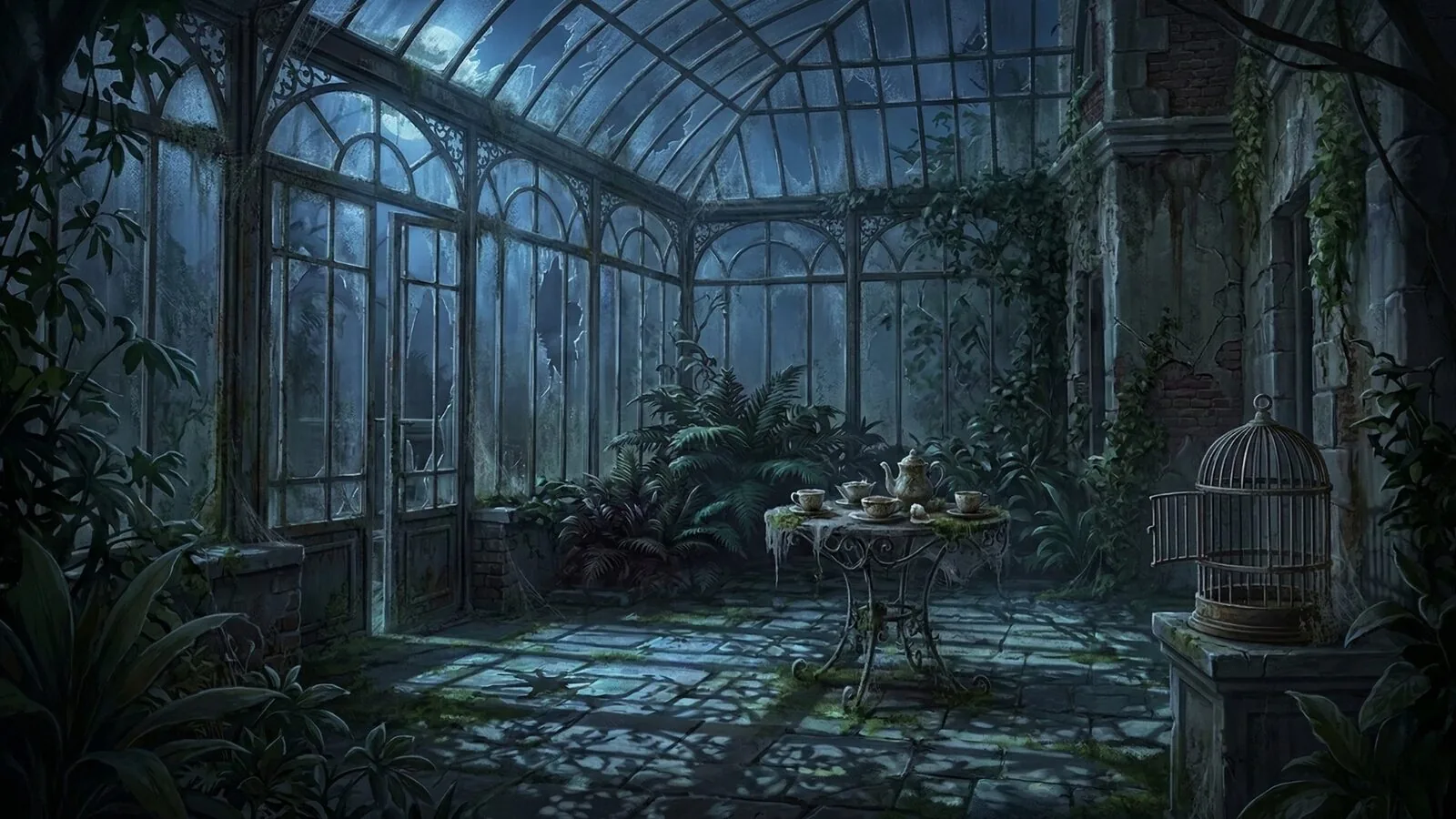
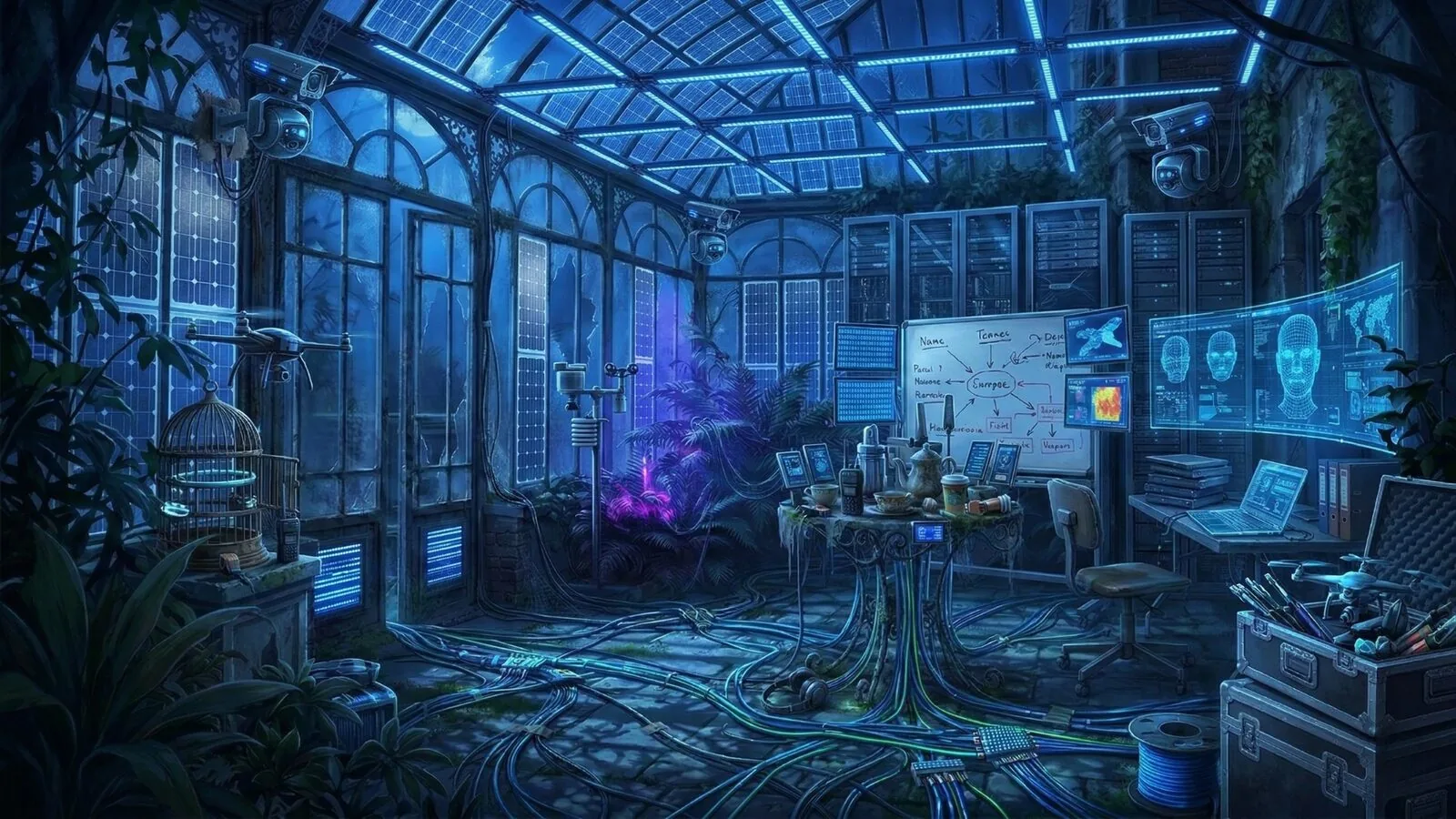
Wicker furniture and climbing plants beneath a glass roof. After the transformation, cables hang from the ceiling, portable monitoring equipment fills the floor, and the glass walls become projection surfaces. The plants are still growing through it all.
 Hidden Behind the Walls
Eight pristine labs concealed behind the Victorian walls, accessed through hidden doors that guests discover in groups of just 12. Each lab reveals a different piece of a covert research programme: CCTV footage of the guests filmed that evening, photographs printed and filed, waveform data from sensors embedded in the house. The house sits on a threshold between dimensions, and someone has been studying it. Repeat visitors discover different labs each time.
A child's room that never aged
Where the bargain was struck
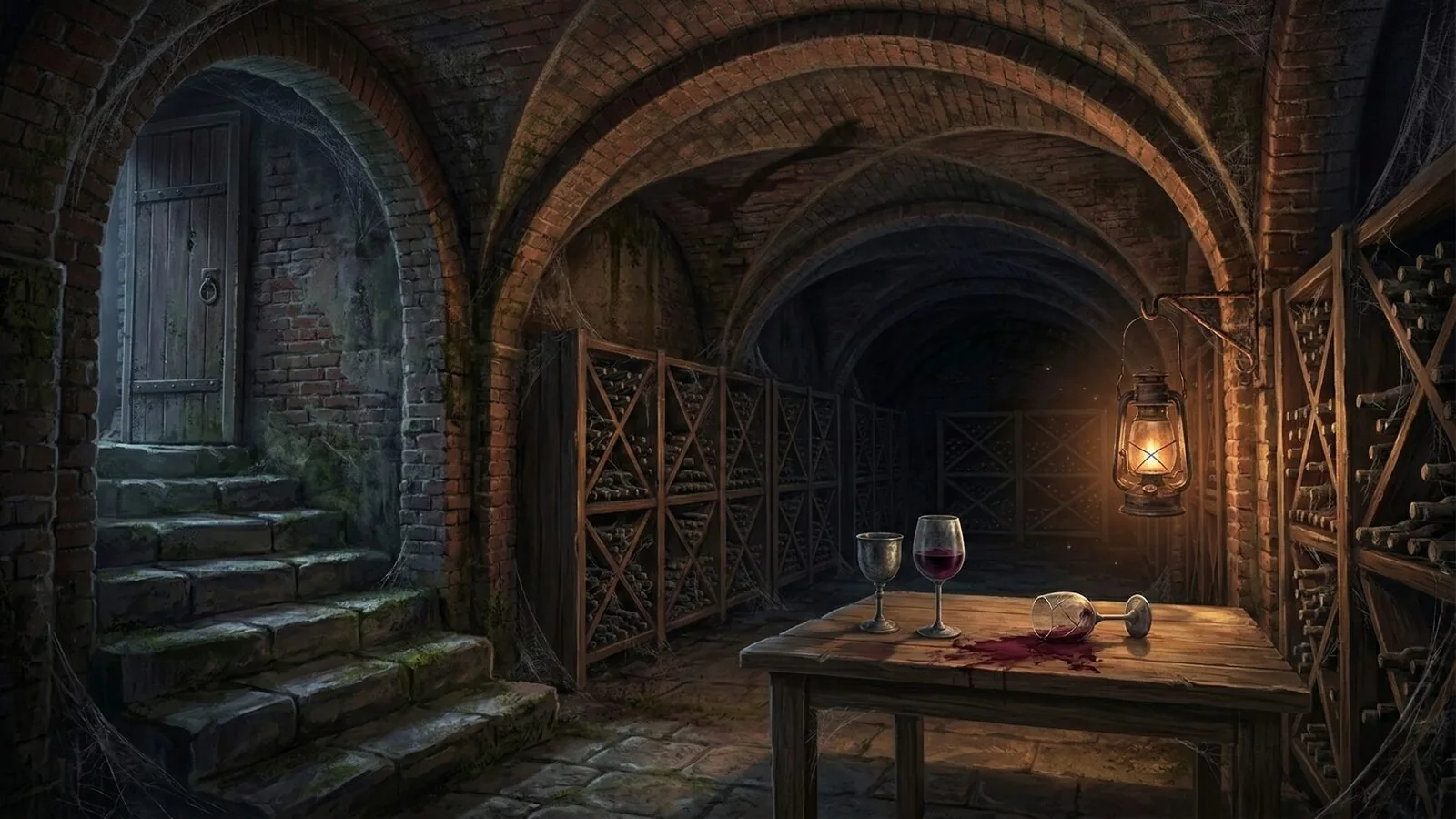
The deepest point of the house
Where it begins and ends
Every object in the house exists in three layers: the Victorian story, the character's lie, and the laboratory truth. Repeat visitors discover all three.
All 100 guests arrive at a grand Victorian ball. Champagne, music, candlelight. It feels like a celebration. Then the atmosphere shifts. The doors lock. The four characters step forward, each claiming to know what really happened in this house, and each one leads a group of 25 into a different wing.
Four groups, four wings, four narrators. Each character leads 25 guests through a different part of the house, telling a different version of events. The rooms feel intimate. The stories feel personal. None of them agree.
Two separate séance rooms, each holding 50 guests. Far more claustrophobic than one room of 100. One is benevolent. One is hostile. Which one you experience depends on your narrator.
All guests reunite. The house transforms around them while they compare notes and realise their stories don't match. The set physically changes during this beat — rooms rearrange, details shift, objects move.
A grand gathering that pulls everyone back together. Tension is high. The cracks between the narratives are starting to show, and the house itself feels different.
Groups reform with different characters. Your new narrator takes you through rooms you've already visited, but the house has transformed and the story is completely different. By the end, every guest has heard two contradicting versions of events. Both felt true. Both had evidence.
Each group of 25 splits in half. Roughly 12 guests follow their actor through a hidden door into a space that should not exist: a pristine research laboratory behind the Victorian walls. Hidden cameras have been recording the guests all evening. Their photos are printed and filed. The haunting is real, but someone found it first, and a covert research programme has been studying what comes through. Each of the 8 labs reveals a different piece of the puzzle.
All 100 guests pour back into the Grand Ballroom. But the room is no longer one thing. The Victorian set is tearing apart — behind the wallpaper, clinical white walls are visible. A gas lamp flickers next to a fluorescent tube. Monitors show waveform data through cracked screens. The two worlds are colliding. Then: total darkness. Silence. One by one, candles relight. The house is restored. As if nothing happened.
Was the laboratory real? Was the Victorian house the illusion? Or was the laboratory the illusion? The house — as always — never answers.
Each visit pairs you with two characters out of four. Your narrator in Act One, a different one after the swap. Four possible pairings before you repeat a combination.
Each of the 8 labs reveals a different piece of the research. Repeat visitors discover different labs each time, gradually piecing together the full programme and what it means.
Every prop and detail in the house exists in three layers: the Victorian story, the character's lie, and the laboratory truth. You can't see all three in one visit.
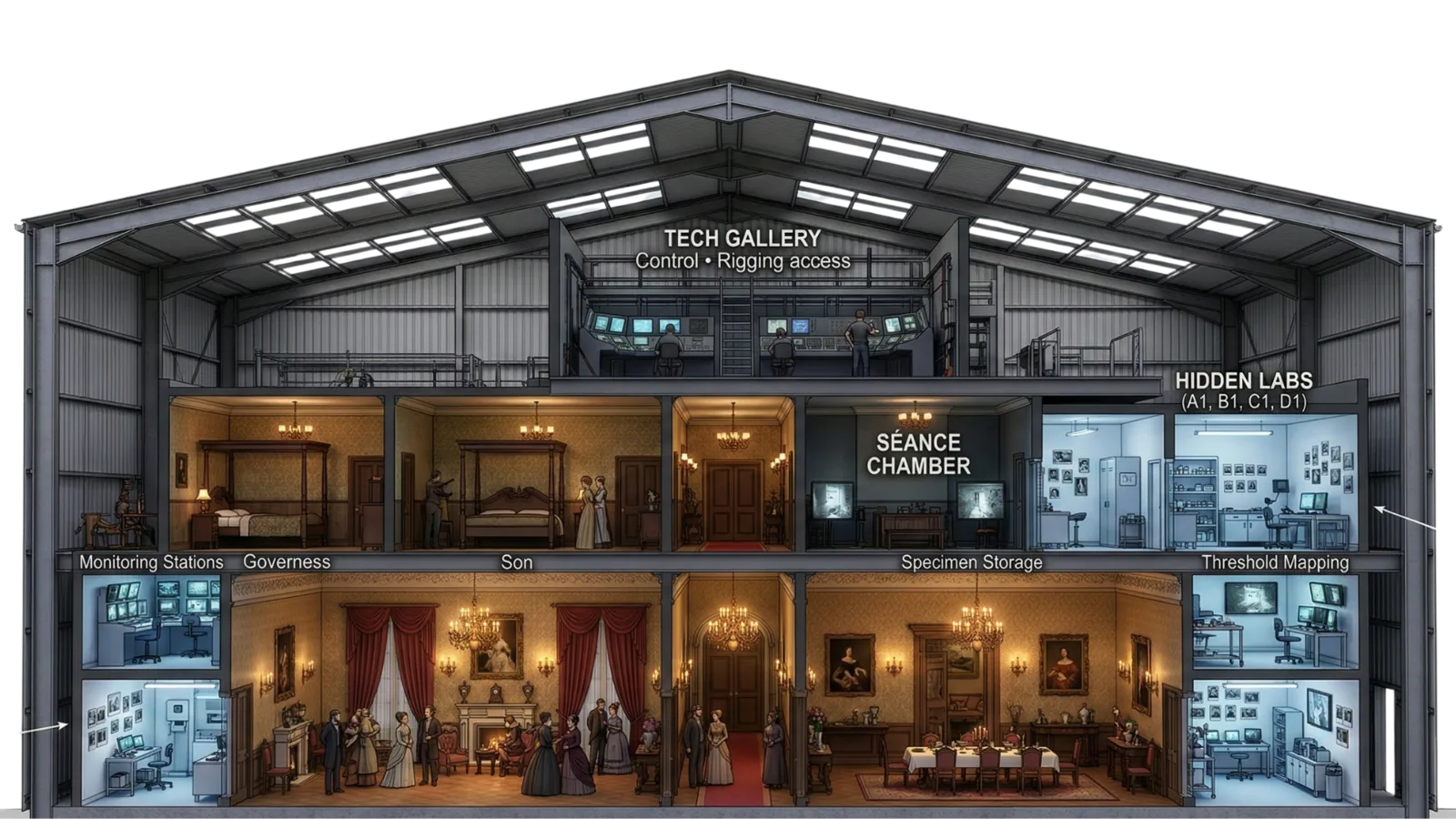
Target areas: Woolwich, Tottenham Hale, Bermondsey, Hackney Wick, Old Kent Road, Stratford. Full detailed floor plans available on request.
Questions, introductions, or just want to talk? We'd love to hear from you.
or email directly
contact@immersivecore.co.uk