01 — Investment Thesis
Three Revenue Engines
Veil House doesn't rely on a single audience or a single visit. It draws from three sources of demand that compound over time.
Engine One — The Draw
A Destination Experience
A full-scale Victorian mansion built inside a warehouse. Hidden laboratories behind the walls. CCTV footage of yourself. London attracts over 20 million tourists a year, many actively seeking unique cultural experiences. Sleep No More became a New York landmark. The Burnt City became a London cultural event. Veil House is designed to sit alongside them — a premium, story-driven attraction that sells on concept alone.
Engine Two — Word of Mouth
The Kind of Thing People Talk About
The concept is inherently shareable. Guests who discover hidden labs, find surveillance footage of themselves, or piece together contradictory stories will talk about it. That organic reach is the most efficient marketing channel in experiential entertainment and it drives audience growth without proportional spend. Every guest becomes a referral.
Engine Three — Repeat Visits
You Can't See It All in One Night
Each guest follows one of four narrators and sees roughly 25% of the show per visit. The content genuinely changes depending on which path you take. The financial model works at an average of 2–3 visits, but even a single return visit significantly increases lifetime value per guest. Comparable London experiences like Phantom Peak achieve 25–30% repeat rates. Repeat visits are a bonus on top of the core model, not a dependency.
Why Small Capacity Works
You Don't Need to Fill the O2
100 guests, 10-18 shows per week, 48 weeks per year. That's up to 86,400 tickets annually at full capacity — in a city of 9 million residents and over 20 million annual tourists. At 70% occupancy in Year 1, Veil House needs roughly 33,600 tickets. Between local demand, tourism, word of mouth, and return visits, the audience pool is vast relative to the venue's small footprint. For context, that's fewer tickets than a single sold-out week of a major West End show.
Who This Is For
Primary
25–40 Experience Seekers
Urban professionals who already spend on theatre, escape rooms, and premium nights out. London has 2.4 million people in this age bracket. Veil House needs fewer than 10,000 of them per year.
Secondary
Tourists & Visitors
London's 20 million annual tourists increasingly seek out unique, “only in this city” cultural experiences over traditional sightseeing. Immersive attractions are already a proven draw — Sleep No More became a must-do for New York visitors. Veil House targets the same psychology: a destination experience that sells on concept alone.
Tertiary
Corporate & Private Hires
Team-building events, client entertainment, and exclusive private hires. Corporate bookings generate premium revenue at higher margins and fill midweek capacity that might otherwise run lighter. The venue's intimate scale makes it ideal for high-end group experiences.
Go-to-Market
How We Sell 23,000 Tickets
The £300k pre-opening marketing budget is deployed across four channels. First, a targeted PR and press campaign — 8–12 press-night performances generate reviews, features, and social coverage before the public opening. Second, influencer and creator partnerships: 50–80 creators across horror, theatre, and London lifestyle verticals receive preview invitations, seeding organic content across platforms where experience-seekers already browse. Third, ongoing performance marketing via Meta, Google, and TikTok targets the 2.4 million 25–40-year-olds in London with interests in theatre, escape rooms, and premium experiences. Fourth, the experience itself is the most powerful channel — every guest who discovers a hidden lab, finds CCTV footage of themselves, or pieces together conflicting stories becomes an unpaid evangelist. Word of mouth is the dominant driver for every successful immersive venue and Veil House is structurally designed to amplify it.
Defensibility
Why This Is Hard to Copy
The moat isn't the idea — it's the execution. Building Veil House requires £2.1M in capital, specialist construction, a bespoke narrative architecture across 17 rooms and hidden laboratories, and an integrated technical system linking CCTV, atmospheric controls, and guest-flow choreography. A competitor would need to commit similar capital, time, and creative depth before selling a single ticket. Beyond the build, the brand itself becomes a defensive asset — Veil House would be the first purpose-built repeat-visit immersive in London, and first-mover advantage in experiential entertainment is powerful. Sleep No More ran for 14 years before closing in January 2025. Being first matters.
03 — The Numbers
Financial Model
Year 1 opens with 10 shows per week (2 per day, 5 days), scaling to 18 shows/week from Year 2. £65 tickets sit below The Burnt City (£55–88) and Sleep No More ($200). All costs verified against current London market rates.
Capital Required: £2.1M
| Scenic Construction (17 rooms) | £750,000 |
| AV, Lighting & Tech Infrastructure | £275,000 |
| Working Capital (6 months) | £400,000 |
| Property (deposit + 3mo rent) | £150,000 |
| Pre-Opening Marketing | £150,000 |
| Props, Costumes & Dressing | £120,000 |
| Fees & Contingency (~13%) | £255,000 |
| Total | £2,100,000 |
Scenic construction covers 17 rooms tiered by complexity: 2 large hero rooms at £65k each, 6 medium rooms at £45k, 5 small exploration rooms at £30k, 4 labs at £40k. AV covers CCTV, show control, lighting, sound, atmospheric systems, and guest-flow technology. The ~13% contingency provides headroom for material cost variation. Working capital covers 6 months of operating runway including founder salary during ramp-up.
Annual Revenue — Year 1 (Conservative)
| Ticket Sales (70 guests × £65 × 10 shows × 48 weeks) | £2,184,000 |
| Bar & Beverages (£8/head) | £268,800 |
| VIP / Premium Tickets (~7% upgrade rate) | £100,000 |
| Merchandise & Case Files (£4/head) | £134,400 |
| Private Hires & Corporate (~12 events/year) | £80,000 |
| Total Annual Revenue (Year 1) | £2,767,200 |
Operating Costs
Costs are split between fixed (incurred regardless of occupancy) and variable (scaling with guest numbers). Rent is the single largest variable between potential sites — the model below shows how different rent levels affect the bottom line.
| Fixed Costs (10 Shows/Week) |
|---|
| Rent & Business Rates | £450,000 |
| Cast (18 performers + 2 SMs) | £684,000 |
| Core FOH & Tech Staff | £200,000 |
| Management Salaries | £160,000 |
| Ongoing Marketing | £180,000 |
| Ticketing & Platform Fees | £109,000 |
| Admin, Insurance, Utilities | £110,000 |
| Total Fixed | £1,893,000 |
| Variable Costs (at 70% Occupancy) |
|---|
| Maintenance & Consumables | £73,000 |
| Total Variable | £73,000 |
How Rent Affects the Numbers
All other costs are identical. Only rent changes between scenarios. At 75% occupancy (scaled, 18 shows/week) with annual revenue of £5.31M:
| Low Rent | Mid Rent | High Rent |
|---|
| Annual Rent | £200k | £300k | £450k |
| Total Op. Costs | £2.89M | £2.99M | £3.14M |
| EBITDA | £2.42M | £2.32M | £2.17M |
| Margin | 46% | 44% | 41% |
| Breakeven Occupancy | ~41% | ~42% | ~44% |
London warehouse rents for ~12,000 sqft range from £18–30/sqft depending on location and specification. The base case (£450k) uses £25/sqft. Cast costs from UK Theatre/Equity Tier C 2025-26 rates with bottom-up NI and pension calculations. Management salaries cover Venue Director, Production Manager, Commercial Lead, and founder operating salary.
What If Occupancy Is Lower?
Fixed costs remain constant regardless of occupancy. Revenue and variable costs scale with guest numbers. Modelled at the base-case rent of £450k — the venue breaks even at approximately 50% occupancy in Year 1, and ~44% at scale.
| Scenario | Occupancy | Revenue | Op. Costs | EBITDA | Margin |
|---|
| Breakeven | ~44% | £3.10M | £3.10M | £0 | 0% |
| Downside | 60% | £4.25M | £3.12M | £1.13M | 27% |
| Base case | 75% | £5.31M | £3.14M | £2.17M | 41% |
| Upside | 85% | £6.02M | £3.15M | £2.87M | 48% |
All figures modelled at the base-case rent of £450k. 75% occupancy at 18 shows/week (scaled) is the operational target. Even at 60%, the venue still delivers £1.13M EBITDA at a 27% margin. At 85% the margin expands to 48%. At a lower-rent site, all EBITDA figures improve and breakeven drops to ~41%. Bar revenue is modelled conservatively at £8/head.
Five-Year Projection
Year 1 is a partial operating year (5 shows/week, ~38 weeks) while the show beds in. From Year 2, the venue scales to 6 shows per week. Years 3–5 reflect modest ticket price increases and mature-venue F&B uplift (£14/head bar, £6/head merch) as the brand establishes.
| Y1 | Y2 | Y3 | Y4 | Y5 |
|---|
| Shows / Week | 5 | 6 | 6 | 6 | 6 |
| Operating Weeks | 38 | 48 | 48 | 48 | 48 |
| Occupancy | 65% | 80% | 85% | 85% | 80% |
| Avg Ticket Price | £85 | £85 | £88 | £90 | £90 |
| Revenue | £2.77M | £5.31M | £5.86M | £6.00M | £5.63M |
| EBITDA | £801k | £2.17M | £2.66M | £2.74M | £2.37M |
| Cumulative EBITDA | −£120k | £532k | £1.47M | £2.46M | £3.30M |
Y1 is deliberately conservative: 5 shows per week, 65% occupancy, partial year. The −£120k operating loss is fully covered by the £680k working capital allocation. From Y2 the venue scales to 6 shows per week and the economics transform. Y5 occupancy drops to 80% to model natural audience maturity before IP refresh or expansion.
Investor Returns
Returns are realised through a combination of annual dividend distributions and an eventual trade sale. Dividend policy is phased: in Years 2–3, approximately 40% of post-tax EBITDA is distributed while retained earnings fund Venue 2 planning; from Year 4 onward, distributions increase to approximately 60% of post-tax EBITDA. At base case, investors could expect distributions of £200–250k per year in Years 2–3, rising to £350–400k from Year 4 as the venue matures.
Illustrative Exit — Single Venue
What a Trade Sale Could Look Like
Experiential leisure companies trade at 6–10× EBITDA. Average Y3–Y4 EBITDA of ~£2.7M implies a Year 5 valuation of £16–27M. Combined with cumulative dividends, total returns on £2.1M could reach £19–30M before EIS relief. With 30% EIS income tax relief reducing effective capital at risk to ~£1.47M, the effective return is even stronger. But the single venue is just the starting point.
Investment structure: The form of the investment — equity, revenue share, or a blend — is open for discussion. The model above is illustrative and would be refined with investors based on the agreed structure.
The Short Version
Why This Is Interesting
£2.1M in (effectively ~£1.47M after EIS relief), 41% margins from Year 2. The venue breaks even at 50% occupancy and delivers £2.17M scaled EBITDA. This raise is structured as an EIS-qualifying equity round — investors receive 30% income tax relief, with the first £250k potentially qualifying under SEIS (50% relief). In a city of 9 million residents and 20 million annual tourists, selling 24,000 tickets a year is realistic.
5x+ on the single venue alone. Full capital payback within Year 2. £2.17M EBITDA at steady state. A trade sale at 6–10× EBITDA in Year 5 implies a valuation of £16–27M.
The real upside is in the rollout. A second venue funded from cash flow plus one international licence takes the group to £1.5M+ EBITDA and a ~2.8× return. The creative IP already exists — scaling it is an execution play, not a creative gamble.
Investment structure is open for discussion. Equity, revenue share, or a blend — the model above is illustrative and would be refined with investors based on the agreed structure.
Download Full Prospectus (PDF) ↓
The Executed Upside: 2 Venues + Licensing
The single venue is the proof of concept. Capital is being raised with the explicit intention of rolling out a second venue and licensing the format once the first site proves the model. This is where the return profile shifts from solid to compelling.
The creative IP — the narrative structure, technical design, guest-flow system, and brand — already exists. A second venue doesn't require starting from scratch. It requires a warehouse and a build team. Lower property costs outside central London mean the second venue can be built for substantially less.
Group Projection: 2 Venues + 1 International Licence
| Y1 | Y2 | Y3 | Y4 | Y5 | Y6 | Y7 |
|---|
| Venue 1 EBITDA | £801k | £2.17M | £2.66M | £2.74M | £2.37M | £2.37M | £2.37M |
| Venue 2 EBITDA | — | — | — | — | £80k | £520k | £680k |
| Licence Revenue | — | — | — | £250k | £100k | £100k | £100k |
| Group EBITDA | £801k | £2.17M | £2.66M | £3.00M | £2.63M | £4.50M | £4.80M |
£1.5M
Avg Y6–Y7 Group EBITDA
£12.3M
Group Exit Valuation
~5.1×
5-Year Return on £2.1M
Venue 2 opens Year 5 (build begins Year 3 once Venue 1 proves out). Venue 2 funded from Venue 1 cash flow and retained earnings, not from the original raise. Dividend policy is phased — 40% payout in Years 2–3, rising to 60% from Year 4. The international licence (signed Y4) generates an upfront fee plus annual royalties — following the model proven by Sleep No More's 8-year Shanghai run.
Second Venue
Same creative blueprint, lower property costs. A UK regional city or outer London site. The build playbook already exists — reducing both cost and timeline for venue two.
International Licence
Sleep No More's Shanghai run proved licensing works for immersive theatre. Upfront fee plus annual royalties on a proven format — revenue with minimal capital outlay.
IP Refresh
The mansion is a platform for multiple narratives over time. Different characters, different story, same house. Fresh content resets the repeat-visit cycle without a fresh build — extending venue life indefinitely.
Acquisition
Operators like Merlin, ATG, and LW Theatres actively acquire proven experiential assets. A multi-venue operation with licensing revenue commands a premium multiple.
05 — Site Strategy
Where We Build & Who Builds It
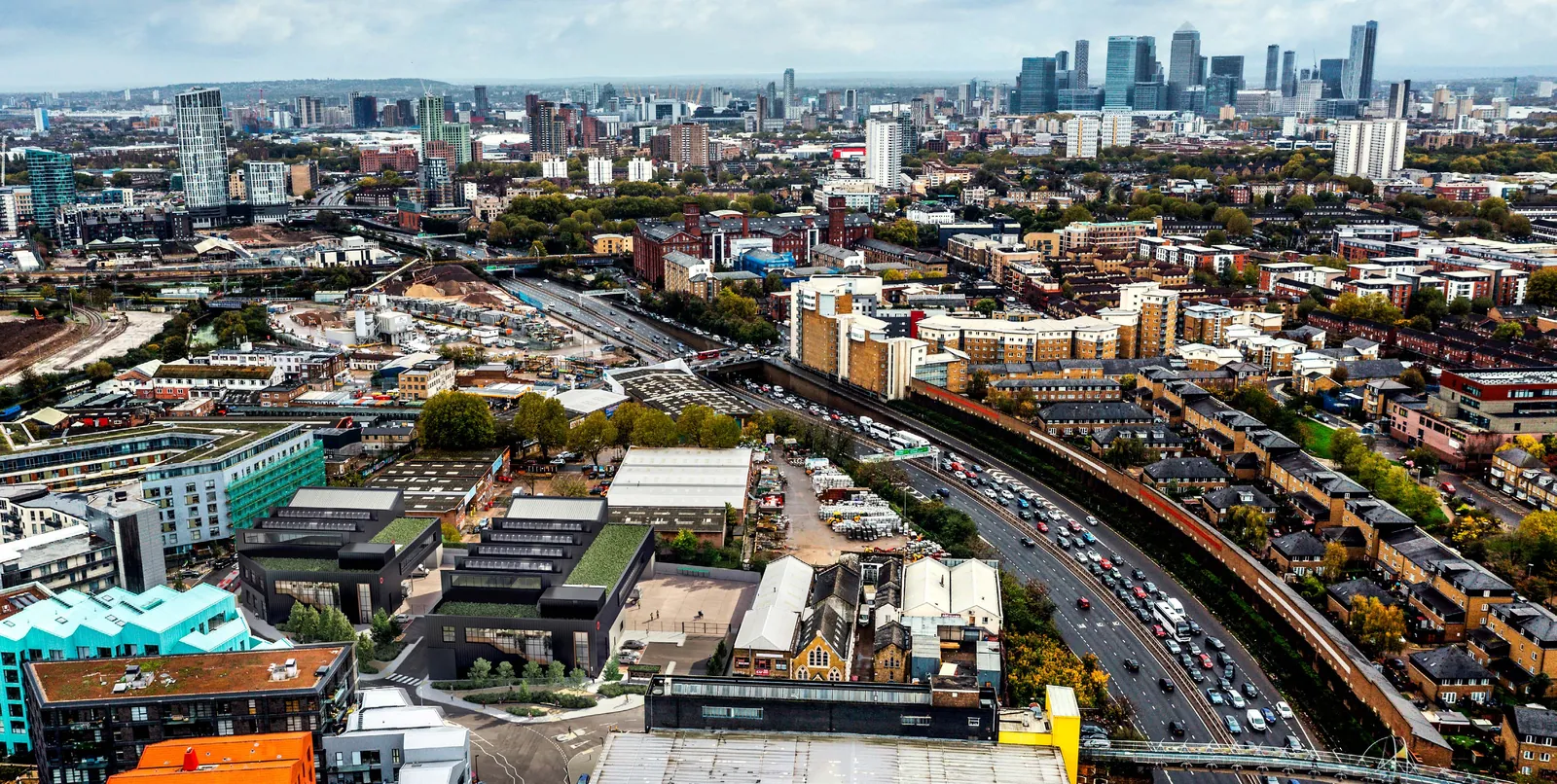
Active site search is underway across East and South-East London. The venue requires approximately 1,100m² of clear-span warehouse space with 4m+ ceiling height, good transport links, and sui generis planning potential. Two representative sites illustrate the range of options available.
Lead Option: SEGRO Park, Hackney Wick (E3)
2,153m²
Total Area (23,170 sqft)
Zone 2
Hackney Wick Creative Quarter
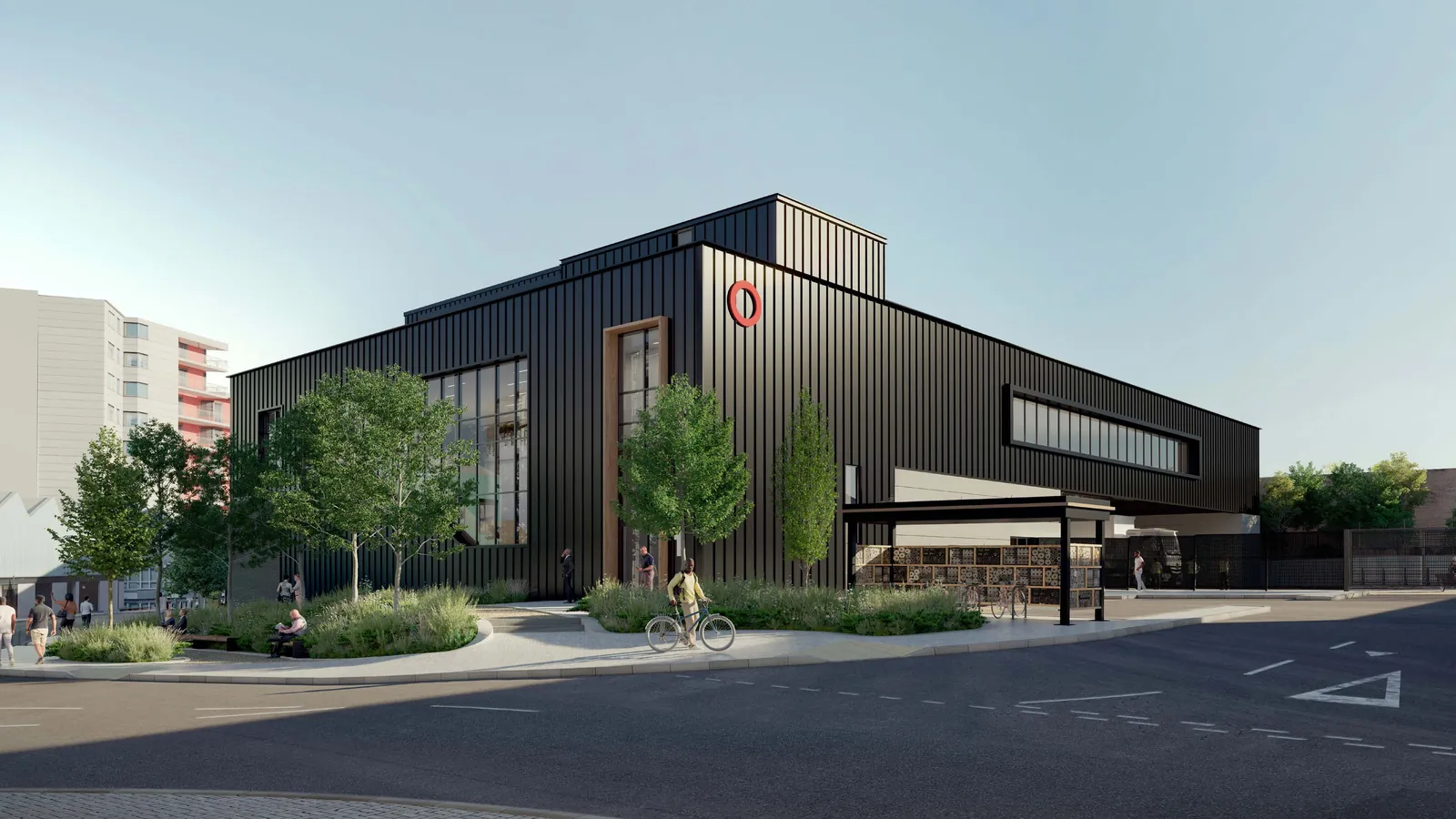
New-build warehouse with 14,205 sqft warehouse floor, 3,530 sqft mezzanine, and 5,435 sqft office space. 12m clear height is ideal for the internal mezzanine set structure. Dark cladding and angular architecture suit the Veil House aesthetic with minimal external adaptation. Secure 30m gated yard provides queuing and pre-show staging space. BREEAM Outstanding target, EPC A+.
Located in London’s fastest-growing creative quarter — CRATE Brewery, The Yard Theatre, and Barge East are within walking distance. 57% degree-educated local population, £64k average household income. 18 minutes from Hackney Wick Overground, 6 minutes to Stratford by tube.
Budget Alternative: Meridian Trading Estate, Charlton (SE7)
5.5–7.7m
Clear Height (Rising to Apex)
Zone 3
Charlton Riverside Regeneration
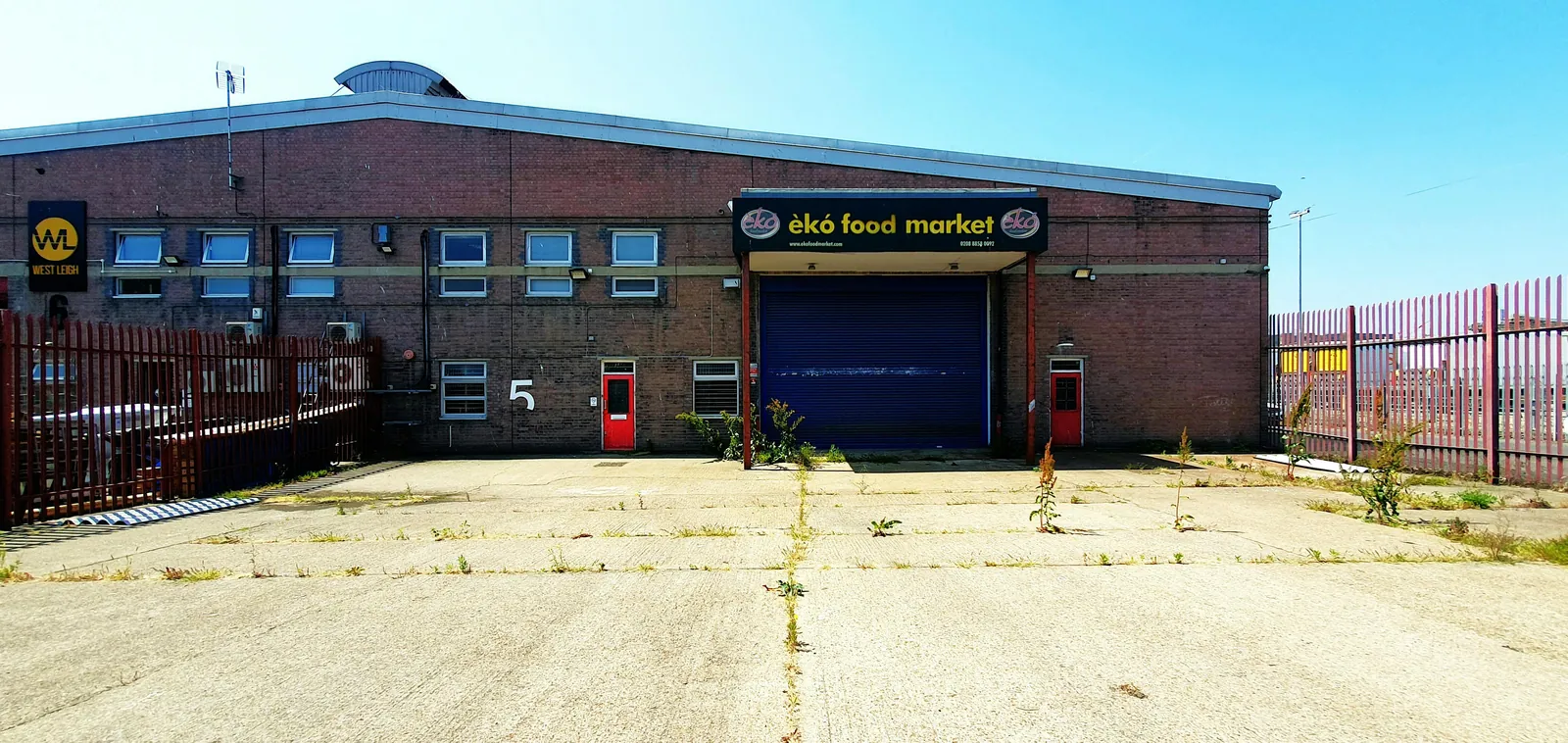
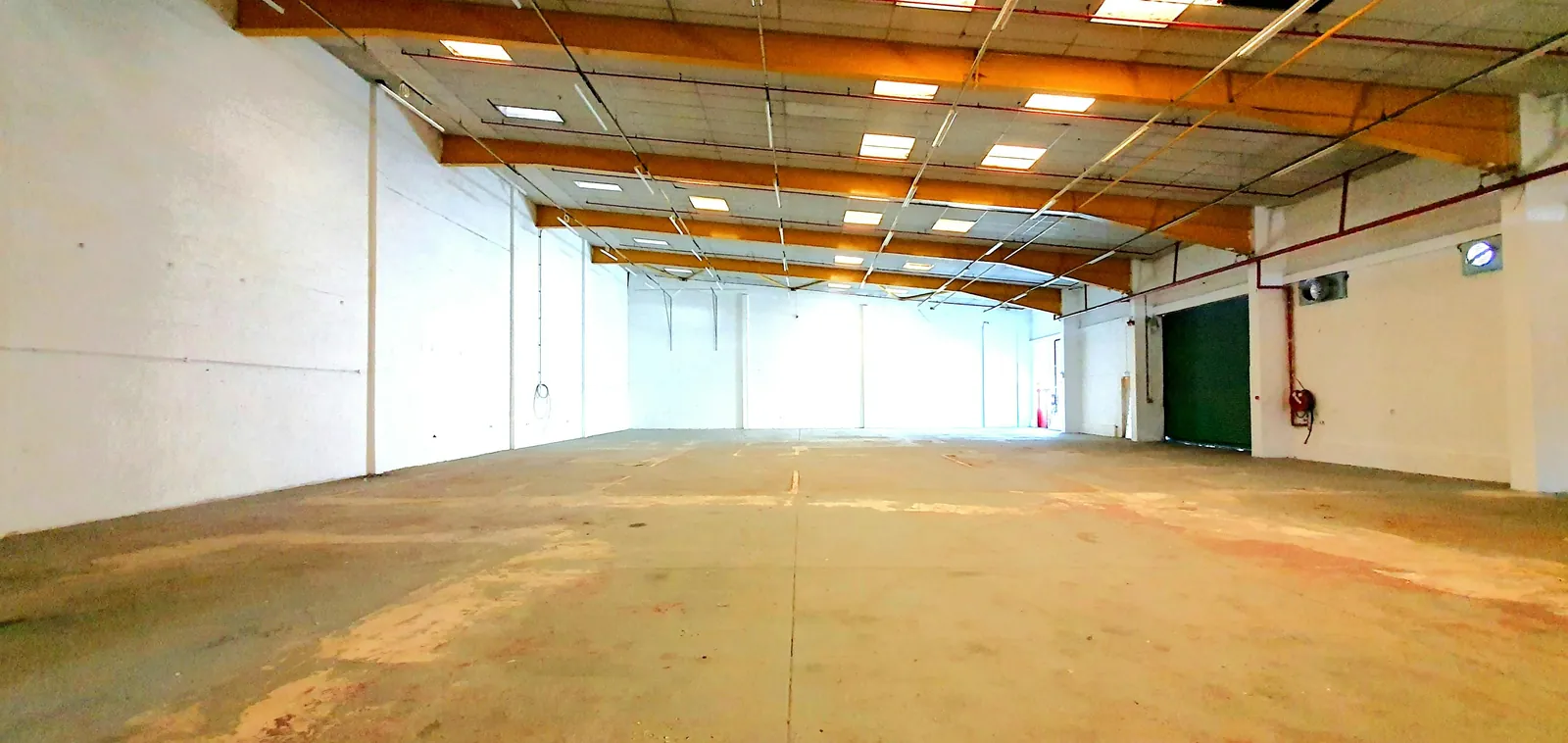
End-of-terrace clear-span portal frame unit with large secure yard and loading access. Significantly lower rent (£222k/year vs. estimated £580–695k at Hackney Wick). Located within the 122-hectare Charlton Riverside regeneration zone — 5,000–7,000 new homes planned. Near North Greenwich tube (Jubilee line) and The O2. Lower eaves height limits set design options but the cost saving is substantial. Would require significant external work to match the venue aesthetic.
These are illustrative examples from an active search, not confirmed sites. Final site selection will be completed in Months 1–4 post-funding, with lease terms and planning viability as the primary selection criteria.
Delivery Partners
The build requires specialist expertise across immersive technology, scenic construction, and theatre engineering. We will commission competitive tenders from established firms in each discipline. The following are indicative of the calibre of partners we’ll engage.
Immersive Technology
Real-Time Systems & AV Integration

Conductr — Creative innovation studio founded by Peter Cliff and Jos van der Steen (ex-Holovis). In-house design, engineering, software, and production. Concept to delivery under one roof. UK, US, and Middle East studios.
Holovis — Global immersive technology specialists. Clients include Universal Studios, Disney, SeaWorld, and Netflix. UK HQ in the Midlands with offices in Orlando, Shanghai, and Abu Dhabi. Complex AV integration, real-time media, and data-driven content.
Scenic Construction
Set Build & Fabrication
Scena Pro — 40+ years in creative construction and theming for theatre, museums, television, and immersive events. Full design-to-manufacture capability including automation systems.

Illusion Design & Construct — London-based scenic fabrication. 196+ projects across immersive worlds, theatres, retail environments, and brand experiences. End-to-end from design through construction, technology, and installation.
Theatre Consultancy
Acoustics & Venue Engineering
Charcoalblue — World-leading theatre, acoustic, and experience consultancy. 120+ team members across London, Bristol, New York, and Melbourne. Projects include Sadler’s Wells East and major West End venues.
Theatreplan — Theatre design and technical consultancy specialising in performance spaces. Sound, communications, and venue systems design for complex multi-room environments.
No formal engagements have been made at this stage. These firms represent the tier of expertise we intend to commission post-funding. Competitive tendering ensures value for money and the right cultural fit for the project.